A Friends of the River Medway project
Sort our sewage,
save our river.
Thousands of Medway homes, farms and businesses aren't on a main sewer — they rely on septic tanks and private treatment. When these aren't looked after, they quietly pollute the river. We're here to change that: helping you understand your system, look after it, and get it serviced affordably — whether it's your home, your farm or your business.
Restore. Protect. Revere.
The problem
A hidden source of river pollution
Across the rural Medway, a large share of homes, farms and businesses areoff-mains — not connected to a maintained public sewer. They treat their own waste with a septic tank, cesspit, or small treatment plant.
Many of these systems are poorly maintained, often through no fault of their owners — the rules aren't well known, tanks are emptied too rarely, and pouring the wrong things down the drain (bleach, biocides, fats) quietly kills the bacteria a septic system depends on. A failing system discharges inadequately-treated effluent to ground and watercourse. Add up thousands of them across the catchment and it becomes a material, diffuse source of pollution in the river we love.
In the countryside the line between a home, a farm and a business is often blurred — and some of the busiest systems are under the most strain. Ruralpubs, hotels and B&Bs in particular run high-use systems that are too often inadequate for the load they carry. Everyone shares the same river, so this is for all of them — your home, your farm or your business.
The good news: most of this is fixable with knowledge, regular maintenance, and a bit of neighbourly organisation. That's what Sort Our Sewage is for.
The programme
From a map to cleaner water
Knowing where private systems are is only the start. Cleaner water needs people to act — so the programme works on three fronts.
Education
Plain-English guidance on how a private system works, the rules every owner must follow, what not to pour down the drain, and how to spot a system that's failing — through the website, local talks, and a friendly leaflet.
A local "milk round"
A neighbourhood-scale maintenance and de-sludging service that brings the cost down by doing whole villages and lanes at once — making good upkeep the easy, affordable default instead of an expensive one-off call-out.
The catchment map
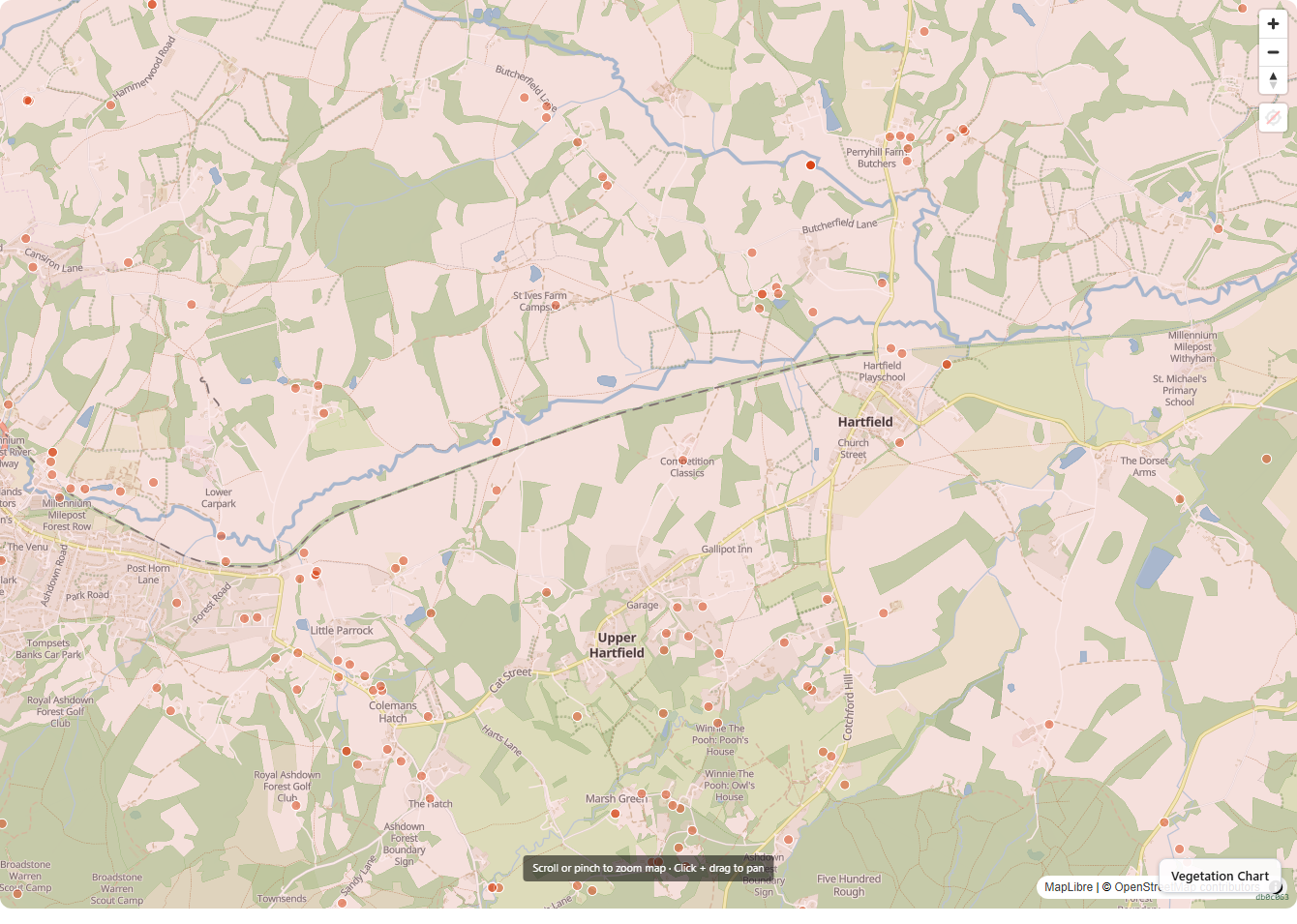
A whole-Medway view of registered private discharges, built on the Owletts Farm ecology platform, so Friends of the River Medway and partners can see the scale, target effort, and track progress over time.
 Click to expand
The map
Six thousand systems, one river
We've mapped every registered private discharge across the whole 1,843 km² Medway catchment — around 6,000 known systems — using the Environment Agency's public registers.
Finding the systems is a two-stage job. Stage one — this map — uses the official registers to plot the discharges we already know about.Stage two goes further: analysing the public sewer network to surface the many more properties that are likely not connected to mains drainage, and so almost certainly on private treatment too. Together they build the fullest picture of where to focus.
The map shows the location and type of registered systems from public records — never the names of the people or businesses there.
Join us
The Sort Our Sewage project
Sort Our Sewage was started by land stewards who live on properties with their own private sewage treatment plants — people who wanted to share the work, the learning, and the satisfaction of knowing we can fix our systems and do right by our rivers and streams. So that we can walk beside them, let our kids swim in them, fish in them, and genuinely know we're doing the right thing.
Our aim is to bring together groups of land stewards and property owners with off-mains systems to work things out together: how best to look after each of our treatment plants; which plants need upgrading, and what the most appropriate, cost-effective and practical fix really is; and how to save everyone money by coordinating with reputable, local, family-owned contractors to service, install and upgrade plants.
At its simplest, we believe we can set up a “milk round” for septic-tank emptying — and especially for de-sludging Klargester-type plants — that lets a local firm work efficiently around many systems in a single day. That saves driver hours, diesel and wear on the trucks, so the firm can pass real savings back to owners without hurting its own bottom line.
At its most ambitious, it's a network of people who support each other through the complicated, expensive and sensitive decisions a treatment plant demands — choices often made only once in a generation, with a steep learning curve and, for many, real anxiety: how to stay on the right side of the law, and how not to get ripped off by an unscrupulous contractor.
Register your interest
Join the project
Tell us a little about you and your system and we'll be in touch as the project reaches your area. No commitment — it just helps us group nearby properties together.
Thank you — you're on the list.
We've passed your details to Friends of the River Medway and we'll be in touch as the project reaches your area. In the meantime, theguide to systems and thecase studies are good places to start.
Get involved
Look after your system
If your home, farm or business is on a septic tank or private treatment plant, a few simple habits keep it working, protect the river, and save you money.
- Empty it regularly. Most tanks need de-sludging roughly once a year — don't wait for a problem.
- Mind what goes down. Bleach, strong cleaners, and biocides kill the bacteria that make the system work.
- Keep fats, wipes and chemicals out. They clog the system and the soakaway.
- Busy premises need more. Pubs, hotels, B&Bs and farms put far more through the system — they usually need emptying more often, and a system sized for the load.
- Know the rules. Private discharges are covered by the General Binding Rules — owners are responsible for compliance.
- Watch for the warning signs. Slow drains, smells, or lush wet patches near the soakaway mean it needs attention.
Sort Our Sewage is run by Friends of the River Medway. Want the local maintenance service in your area, or to help us reach more homes, farms and businesses? Get in touch through FoRM — we'd love your help.